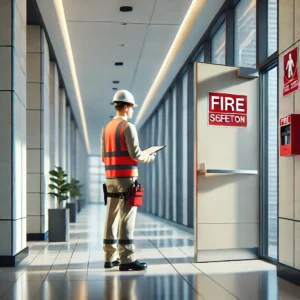
In 2016, when the 2012 edition of the Life Safety Code® was adopted by CMS, it introduced a significant compliance requirement for healthcare occupancies: annual fire door inspections.
CMS later clarified the requirement in its July 28, 2017 Survey & Certification Memo (S&C 17-38-LSC). According to the guidance:
-
Fire door assemblies must be inspected annually in accordance with the 2010 edition of NFPA 80 – Standard for Fire Doors and Other Opening Protectives
-
Smoke barrier doors are not subject to annual testing
-
Non-rated doors are not required to be inspected annually (but should be included in a maintenance program)
-
Full compliance was expected by January 1, 2018
May-2019-Life-Safety-Informa
Since then, enforcement has intensified. Some providers have been cited under K-761 for noncompliance
May-2019-Life-Safety-Informa
.
The question is no longer whether inspections are required.
The real question is: Who is qualified to perform them?
Does the Inspector Need to Be Certified?
Section 7.2.1.15.5 of the Life Safety Code states that testing of fire door assemblies:
“Shall be performed by individuals who can demonstrate knowledge and understanding of the operating components of the type of door being subject to the testing.”
May-2019-Life-Safety-Informa
Notice what is not included in the code language: the word “certified.”
NFPA does not require inspectors to hold a specific license or certification. Instead, the facility must be able to demonstrate that the person conducting the inspection is knowledgeable and competent.
This distinction is critical during surveys and audits.
What Demonstrates Competency?
Healthcare organizations should maintain documentation showing that the individual performing inspections has appropriate training and experience. Best practices include:
-
Keeping a copy of the NFPA 80 inspection checklist on-site
-
Documenting training related to fire door inspection, testing, installation, or repair
-
Recording the inspector’s experience working with fire door assemblies
May-2019-Life-Safety-Informa
In short: documentation protects the facility.
Why This Matters During Surveys
State survey agencies have increasingly scrutinized not only inspection reports, but also the qualifications of the person who performed them.
Deficiencies can result in:
-
K-761 citations
-
Corrective action plans
-
Increased survey scrutiny
-
Insurance complications
For healthcare facilities operating under CMS oversight, there is little margin for error.
Authoritative Resources
To review the applicable standards and guidance directly, consult:
-
🔗 National Fire Protection Association – NFPA 80
https://www.nfpa.org -
🔗 CMS Survey & Certification Memos
https://www.cms.gov/medicare/provider-enrollment-and-certification/surveycertificationgeninfo/policy-and-memos-to-states-and-regions -
🔗 The Door and Hardware Institute (training programs)
https://www.dhi.org
These resources outline code requirements and educational pathways for inspection competency.
Protect Your Facility with Properly Documented Inspections
Annual fire door inspections are not a paperwork exercise — they are a life safety obligation. More importantly, they must withstand regulatory review.
At USA Fire Doors Inspection, we provide:
-
Comprehensive NFPA 80 compliant inspections
-
Detailed deficiency reporting with photographic documentation
-
Clear, organized PDF reports suitable for AHJ and CMS review
-
Experienced inspectors with documented training and field expertise
If your healthcare facility needs a compliant and defensible inspection program, now is the time to review your documentation and inspection process.
Schedule Your Annual Inspection
Avoid citations. Strengthen compliance. Protect your occupants.
📞 Call us today at (813) 340-1335
📧 Email: [email protected]
🌐 Visit: https://usafiredoorsinspection.com
Let’s make sure your inspection program stands up to scrutiny — year after year.